
Blind Rivets
Permanent one-sided joints in sheet and thin section
A blind rivet joins material when you can only reach one side of it. The rivet body is inserted through the hole and a tool pulls the mandrel back through it; the tail deforms into a formed head on the far side, and the mandrel snaps off at a designed break point. The joint is permanent, vibration-resistant and needs no access whatsoever behind the work.
Stocked in Bengaluru · Special sizes made to order · Bulk rates available
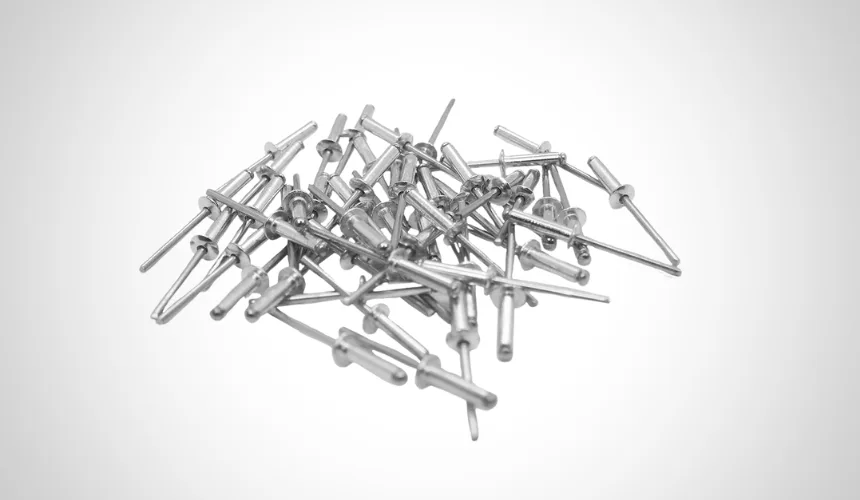
Available sizes
Dia × Length — inch (mm)
- 3/32 x 1/4 (2.4 x 6)
- 3/32 x 5/16 (2.4 x 8)
- 3/32 x 3/8 (2.4 x 3/10)
- 3/32 x 1/2 (2.4 x 12)
- 1/8 x 1/4 (3.2 x 6)
- 1/8 x 5/16 (3.2 x 8)
- 1/8 x 3/8 (3.2 x 10)
- 1/8 x 1/2 (3.2 x 12)
- 1/8 x 5/8 (3.2 x 16)
- 1/8 x 3/4 (3.2 x 20)
- 1/8 x 1 (3.2 x 25)
- 5/32 x 1/4 (4 x 6)
- 5/32 x 5/16 (4 x 8)
- 5/32 x 3/8 (4 x 10)
- 5/32 x 1/2 (4 x 12)
- 5/32 x 5/8 (4 x 16)
- 5/32 x 3/4 (4 x 20)
- 5/32 x 1 (4 x 25)
- 3/16 x 3/8 (4.8 x 10)
- 3/16 x 1/2 (4.8 x 12)
- 3/16 x 5/8 (4.8 x 16)
- 3/16 x 3/4 (4.8 x 20)
- 3/16 x 1 (4.8 x 25)
- 3/16 x 1.1/4 (4.8 x 32)
- 1/4 x 1/2 (6.3 x 12)
- 1/4 x 5/8 (6.3 x 16)
- 1/4 x 3/4 (6.3 x 20)
- 1/4 x 1 (6.3 x 25)
- 1/4 x 1.1/4 (6.3 x 32)
Aluminium, steel and stainless. Match the grip range to the total thickness of the sheets you are joining.
Available sizes for Blind Rivets: 3/32 x 1/4 (2.4 x 6), 3/32 x 5/16 (2.4 x 8), 3/32 x 3/8 (2.4 x 3/10), 3/32 x 1/2 (2.4 x 12), 1/8 x 1/4 (3.2 x 6), 1/8 x 5/16 (3.2 x 8), 1/8 x 3/8 (3.2 x 10), 1/8 x 1/2 (3.2 x 12), 1/8 x 5/8 (3.2 x 16), 1/8 x 3/4 (3.2 x 20), 1/8 x 1 (3.2 x 25), 5/32 x 1/4 (4 x 6), 5/32 x 5/16 (4 x 8), 5/32 x 3/8 (4 x 10), 5/32 x 1/2 (4 x 12), 5/32 x 5/8 (4 x 16), 5/32 x 3/4 (4 x 20), 5/32 x 1 (4 x 25), 3/16 x 3/8 (4.8 x 10), 3/16 x 1/2 (4.8 x 12), 3/16 x 5/8 (4.8 x 16), 3/16 x 3/4 (4.8 x 20), 3/16 x 1 (4.8 x 25), 3/16 x 1.1/4 (4.8 x 32), 1/4 x 1/2 (6.3 x 12), 1/4 x 5/8 (6.3 x 16), 1/4 x 3/4 (6.3 x 20), 1/4 x 1 (6.3 x 25), 1/4 x 1.1/4 (6.3 x 32).
What it is used for
Use a blind rivet to join thin sheet when you can only reach one side of the joint.
One-sided fixing
Sets completely from the front — no access needed behind.
Permanent joints
Cannot vibrate loose the way a bolt can.
Sheet metal work
Ducting, enclosures, cabinets and trays.
Roofing accessories
Flashings, ridge caps, gutters and downpipes.
Overview
That capability is why rivets are still everywhere in sheet metal work: ducting, enclosures, cladding, signage, trailer bodies, ladders, tanks and cable trays. It also explains why rivet failures are so often specification failures rather than tool failures — the grip range has to match the actual stack thickness, and the hole has to be the right size.
We stock open-end, closed-end and multigrip blind rivets from 3.2 mm to 6.4 mm in aluminium, steel and stainless, in dome, countersunk and large-flange heads.
One-sided installation
Sets from the accessible face only — the whole reason blind rivets exist and the thing no bolt can do.
Vibration resistant
A formed rivet cannot back out. On vibrating assemblies it holds where a threaded fastener would need locking.
Full material range
Aluminium for light and non-corrosive work, steel for strength, stainless for corrosion. Mandrel material matched to avoid galvanic staining.
Closed-end for sealed joints
Closed-end rivets give a watertight, gas-tight joint — essential in tanks, enclosures and anywhere the mandrel hole would be a leak path.
Specifications
Standard stock configuration. Non-standard sizes, drives and coatings are made to order — ask us.
| Diameter range | 3.2 mm, 4.0 mm, 4.8 mm, 5.0 mm, 6.4 mm |
|---|---|
| Length range | 6 mm to 30 mm |
| Body materials | Aluminium, steel, stainless SS 304, copper |
| Mandrel materials | Steel, stainless — matched to body to prevent staining |
| Head styles | Dome, countersunk 120°, large flange |
| Types | Open-end, closed-end (sealed), multigrip, peel, structural |
| Hole diameter | Rivet diameter + 0.1–0.2 mm |
| Grip range | Marked on every box — must bracket the total stack thickness |
| Finish | Plain, anodised, painted to colour on request |
| Packing | 500 / 1000 pc boxes, bulk cartons to order |
Technical documentation
Exact specifications vary between manufacturers and production batches. Tell us the job and we will confirm the specification before despatch, and send the manufacturer’s datasheet or test certificate for the batch if you need it for a submittal.
Section 1 — Installation
How blind rivets are installed
The rivet does the work; your job is to give it the right hole and the right grip range. Get those two right and a blind rivet is close to foolproof.
Drawing made for Modern Fastening Solution. Shown for guidance — check against your own job before ordering.
- 1
Add up the stack and pick the grip range
Measure the total thickness of everything being joined, then choose a rivet whose stated grip range brackets that figure — not one that just reaches it. This is the decision that determines whether the joint works.
- 2
Drill the hole 0.1–0.2 mm oversize
A 4.8 mm rivet wants a 4.9 or 5.0 mm hole. Too tight and the rivet will not enter cleanly; too loose and the joint will be slack once set.
- 3
Clamp the sheets together
Any gap between the sheets becomes permanent — the rivet forms its head against the far sheet wherever it happens to be. Clamp before setting.
- 4
Seat the tool square and pull
Hold the rivet gun perpendicular and squeeze in a single continuous action. Rocking the tool sets the head off-centre and weakens the joint.
- 5
Confirm a clean mandrel break
The mandrel should snap at or just below the head. A mandrel standing proud means the rivet is not fully set — drill it out and replace it rather than trimming the stub off.
Section 2 — Applications
Where blind rivets are used
Thin-section assembly where the back is inaccessible, or where a permanent, vibration-proof joint is wanted without welding.
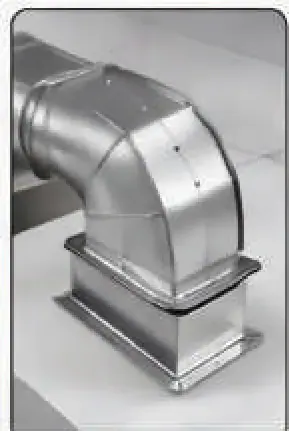
Ducting and HVAC
Joining duct sections, flanges and transitions where only one side is reachable.
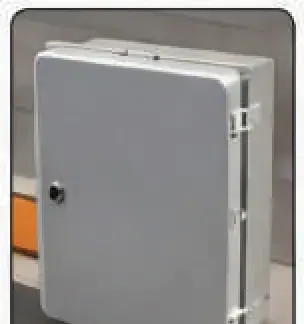
Electrical enclosures
Panel boxes, cabinets and trunking assembly in sheet metal shops.

Signage and display boards
ACP panels, hoardings and display frames.
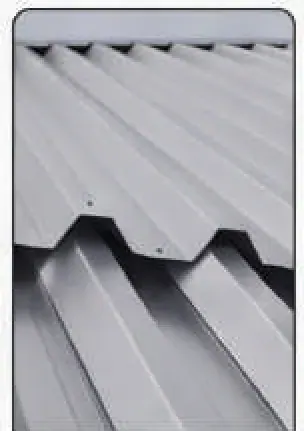
Roofing and sheet metal work
Flashings, ridge caps, gutters and sheet laps.
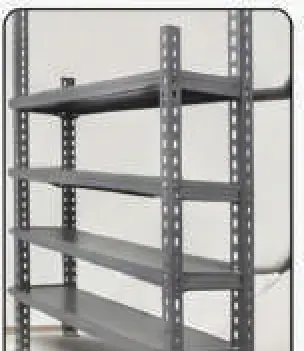
Industrial and general fabrication
Racking, enclosures, trailers and light assemblies across general fabrication.
Blind Rivets — questions we get asked
What size hole do I drill for a blind rivet?
The rivet diameter plus 0.1 to 0.2 mm. A 4.8 mm rivet takes a 4.9 or 5.0 mm hole. Drilling to exactly the rivet diameter makes insertion difficult and can shave the body as it goes in.
How do I choose the right rivet length?
By grip range, never by length alone. Every box states a grip range — the minimum and maximum total material thickness the rivet will join. Add up all the layers and pick a rivet whose range comfortably brackets that number.
What is the difference between open-end and closed-end rivets?
An open-end rivet leaves the mandrel hole open through the middle. A closed-end rivet is sealed at the tail, so the finished joint is watertight and gas-tight. Use closed-end for tanks, external enclosures and anywhere moisture ingress matters.
Can blind rivets be removed?
Only by drilling them out. Use a bit slightly smaller than the rivet body, drill through the head until it separates, then punch the remaining body through. The hole can usually be re-riveted with the next size up.
Aluminium, steel or stainless?
Match the rivet to the parent material wherever you can. Aluminium for aluminium and light non-structural work, steel where shear strength matters, stainless for corrosive or exterior duty. Mixing materials at the joint invites galvanic corrosion.
Request a price for Blind Rivets
Send us the sizes and quantities and we will come back with a price, usually the same working day. Not sure of the size? Describe the job and we will work it out.
Often ordered with this
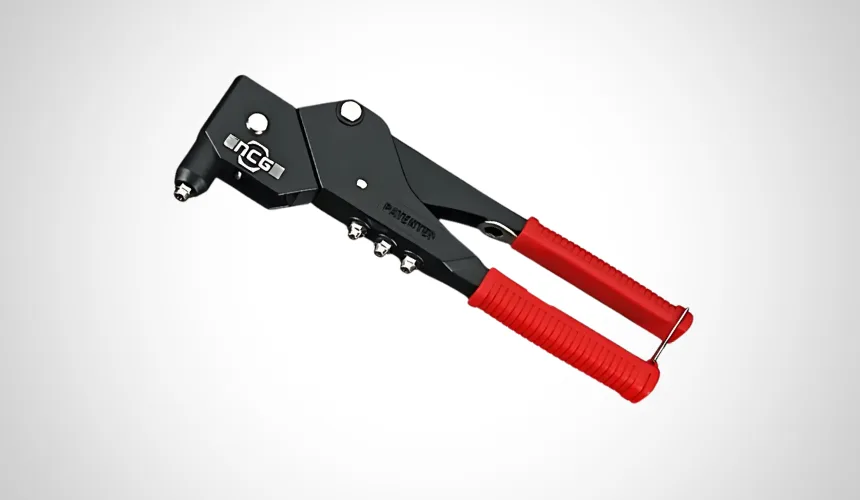
Accessories
Rivet Guns
Hand and lazy-tong tools for setting blind rivets
View specifications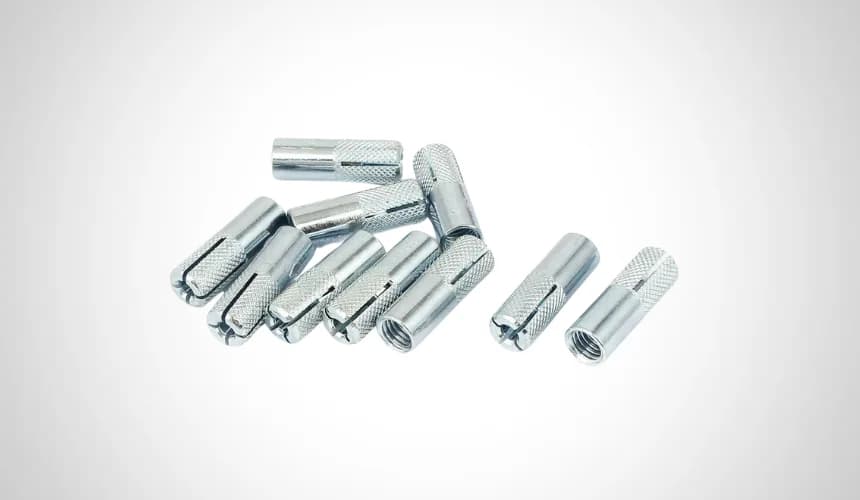
Anchors & Rivets
Drop-In Anchors
Flush internally threaded anchors for overhead services
View specifications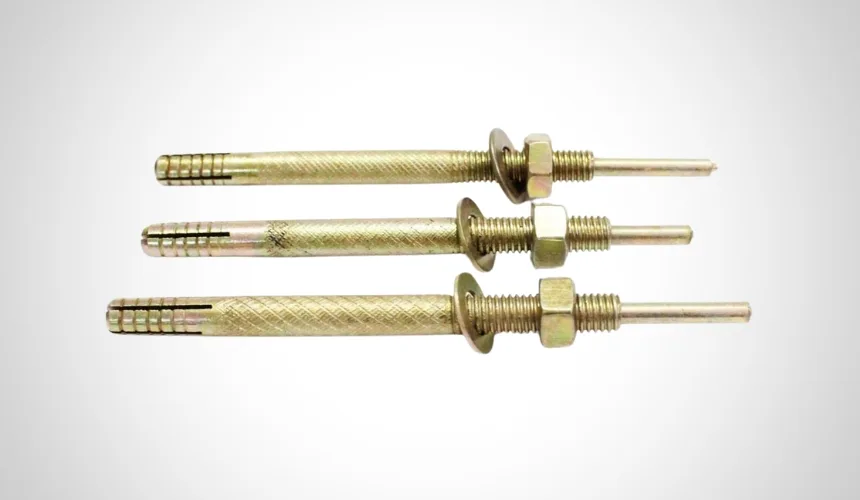
Anchors & Rivets
Pin Type Anchors
Hammer-set anchors for fast light and medium fixing
View specifications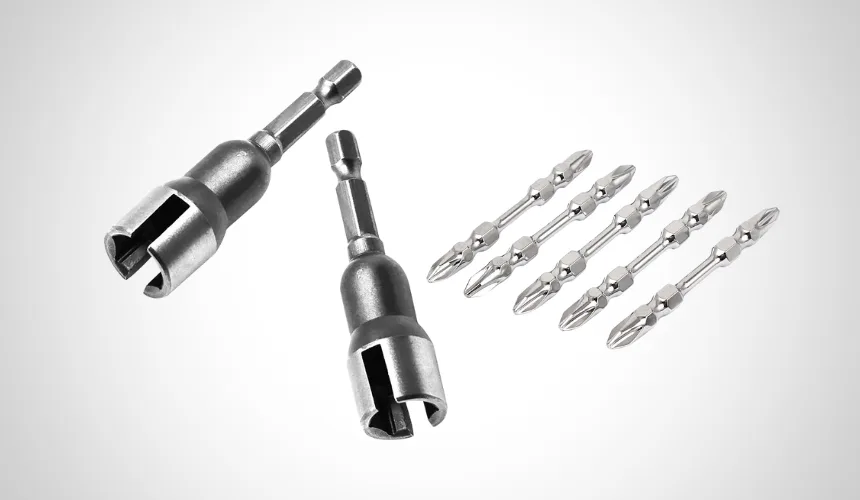
Accessories
Sockets, Nut Setters & Driver Bits
The driving end of every fastener you install
View specificationsTell us what you need
Send us the sizes and quantities, a photo, or just a description of the job. Most quotations go out the same working day.
Monday – Saturday, 9:30 AM – 7:00 PM · Delivery across Bengaluru, Karnataka and all India