
Chipboard Screws
Pulls timber and board tightly together
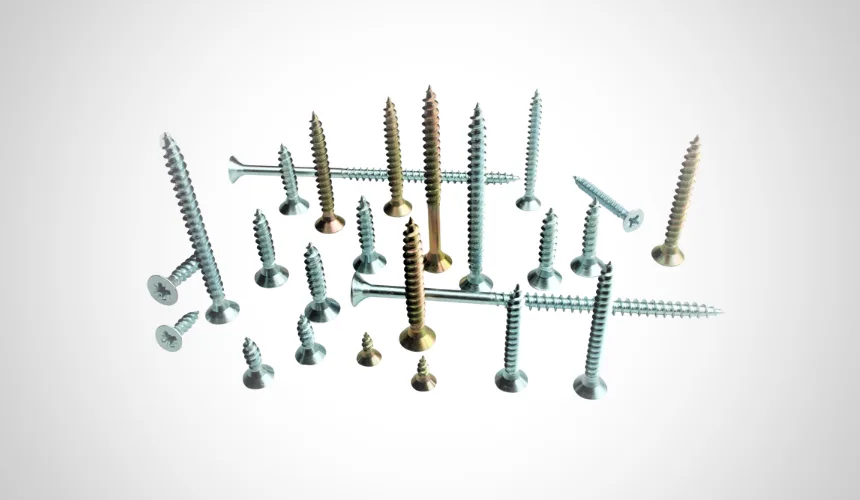
A chipboard screw is built to pull two pieces of board or timber tightly together without splitting them.
Stocked in Bengaluru · Special sizes made to order · Bulk rates available
Available sizes
Dia × Length (mm)
- 3.5 x 13
- 3.5 x 16
- 3.5 x 20
- 4 x 16
- 4 x 20
- 4 x 25
- 4 x 30
- 4 x 35
- 4 x 40
- 4 x 45
- 4 x 50
- 5 x 30
- 5 x 35
- 5 x 40
- 5 x 50
- 5 x 60
- 5 x 75
- 5 x 100
3.5 mm, 4 mm and 5 mm diameters. Yellow zinc as standard; black and stainless made to order.
Available sizes for Chipboard Screws: 3.5 x 13, 3.5 x 16, 3.5 x 20, 4 x 16, 4 x 20, 4 x 25, 4 x 30, 4 x 35, 4 x 40, 4 x 45, 4 x 50, 5 x 30, 5 x 35, 5 x 40, 5 x 50, 5 x 60, 5 x 75, 5 x 100.
What it is used for
Use this screw for furniture, joinery and timber work where the joint has to pull up tight.
Furniture and cabinets
Carcass assembly in MDF, particle board and plywood.
Modular kitchens
Cabinet building and on-site installation.
Timber framing
Battens, noggins and general softwood work.
Tight joints
The plain shank under the head lets the screw pull the two pieces together.
Overview
It has a twin thread, which means it goes in twice as fast per turn, and a sharp point that starts without a pilot hole in most boards.
The important detail is the plain unthreaded section just under the head. Because it does not grip the top piece, the thread in the lower piece can pull the joint closed. A fully threaded screw holds the gap open instead.
Twin thread
Two thread starts mean the screw goes in twice as fast per turn.
Pulls joints closed
The plain section under the head lets the lower thread draw the pieces tight.
Sharp point
Starts without a pilot hole in chipboard, MDF and softwood.
Ribbed head
Cutting ribs under the head give a clean flush seat instead of a crushed one.
Specifications
Standard stock configuration. Non-standard sizes, drives and coatings are made to order — ask us.
| Head | Countersunk with cutting ribs |
|---|---|
| Drive | Pozidriv PZ2 / Torx T20–T25 |
| Thread | Twin start, partially threaded |
| Diameter range | 3.5 mm, 4 mm, 5 mm |
| Length range | 13 mm to 100 mm |
| Finish | Yellow zinc; black and stainless to order |
| Material | Hardened carbon steel |
| Point | Sharp type-17 cutting point |
| Substrate | Chipboard, MDF, plywood, softwood, hardwood |
| Packing | 200 / 500 / 1000 piece boxes |
Technical documentation
Exact specifications vary between manufacturers and production batches. Tell us the job and we will confirm the specification before despatch, and send the manufacturer’s datasheet or test certificate for the batch if you need it for a submittal.
Section 1 — Installation
How to fit it
Two things matter: whether to drill a pilot hole first, and picking the right length. Board is strong in the middle and very weak at the edges, which is why edge fixings split.
Drawing made for Modern Fastening Solution. Shown for guidance — check against your own job before ordering.
- 1
Pre-drill near edges and in hardwood
Within 50 mm of a board edge, or in any hardwood, drill a pilot hole about 70 percent of the thread diameter. In the middle of a chipboard panel you can go straight in.
- 2
Drill the top piece for a tight joint
If you are using a fully threaded screw, drill the top piece to the shank size so the thread only grips the lower piece. That is what closes the joint.
- 3
Two thirds in the lower piece
Aim for about two thirds of the screw length in the receiving piece. Joining two 18 mm panels, use 40 to 45 mm.
- 4
Use moderate speed
800 to 1,500 rpm. Board strips easily, and heat from high speed ruins the grip.
- 5
Stop at flush
Let the ribs cut the seat, then stop. Going further chews out the material the thread needs.
Section 2 — Applications
Where it is used
Joinery, furniture and timber work of all kinds.

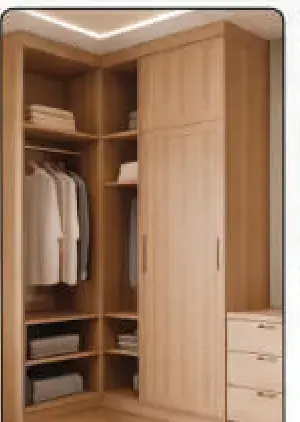
Furniture and cabinet fitting
Carcass assembly, wardrobes and fitted furniture in particle board and MDF.

Kitchen and modular units
Modular kitchen carcasses, drawer boxes and worktop fixings.

Shelving and racking
Shop shelving, display units and storage built from board.
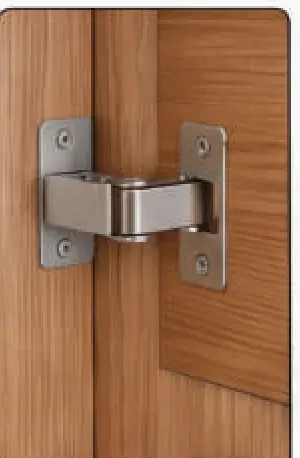
Wooden doors and windows
Hinges, hardware and frame fixing into timber and engineered board.
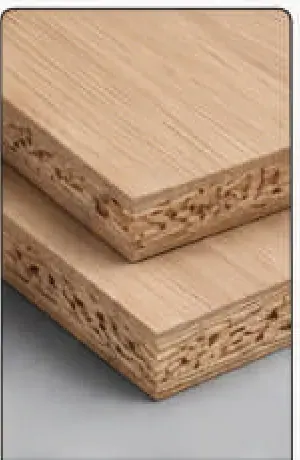
Plywood, MDF and particle board
General woodworking where a deep twin thread has to pull two boards tight.
Chipboard Screws — questions we get asked
Do I need to pre-drill for chipboard screws?
In the middle of a panel, usually not. Within about 50 mm of an edge, in hardwood, or with screws over 4.5 mm, pre-drill at roughly 70 percent of the thread diameter.
What is the difference between chipboard and drywall screws?
Chipboard screws have a countersunk head and a twin thread, and are built to pull two pieces together. Drywall screws have a bugle head and only fix board to a frame. Drywall screws are also brittle and should never be used structurally.
What length for 18 mm panels?
40 to 45 mm for a face-to-edge joint between two 18 mm panels. Pre-drill the edge-grain piece.
Can chipboard screws be used outdoors?
Only in hot-dip galvanised or stainless. Yellow zinc will corrode within a monsoon, and treated timber attacks plain plating quickly.
Request a price for Chipboard Screws
Send us the sizes and quantities and we will come back with a price, usually the same working day. Not sure of the size? Describe the job and we will work it out.
Often ordered with this
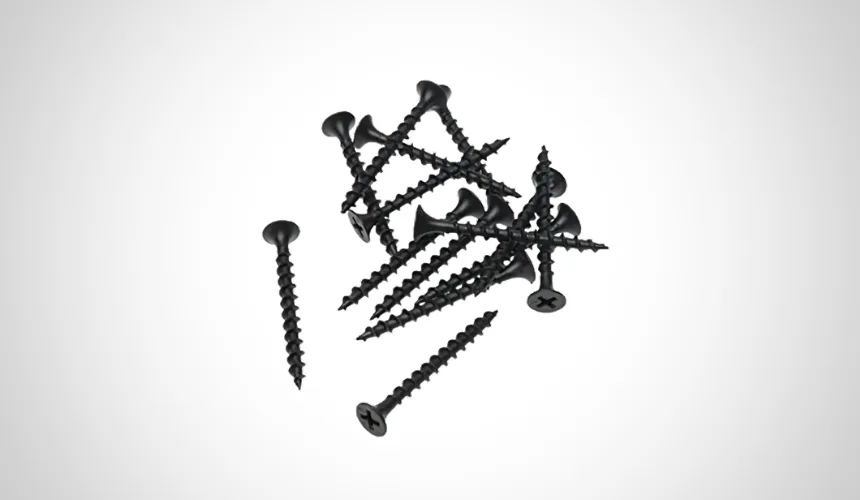
Drywall & Wood Screws
Drywall Screw — Black
The standard indoor drywall screw
View specifications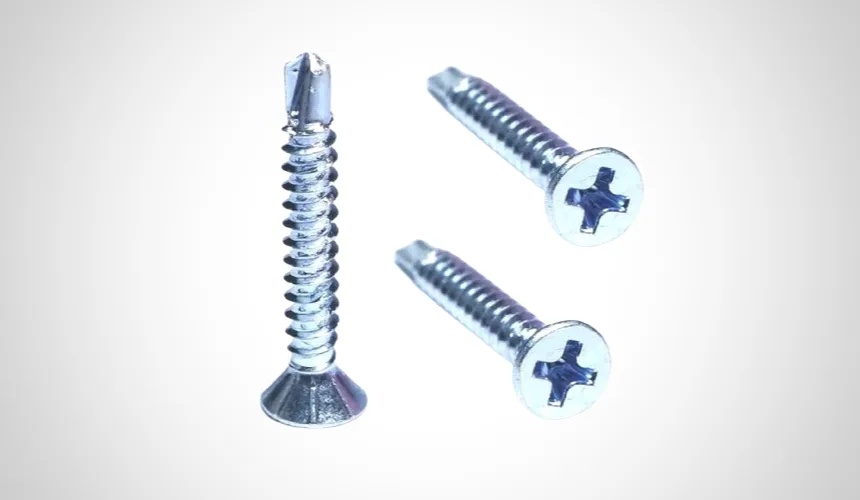
Self Drilling Screws
SDS CSK Head Screws
Countersunk head that finishes flush
View specifications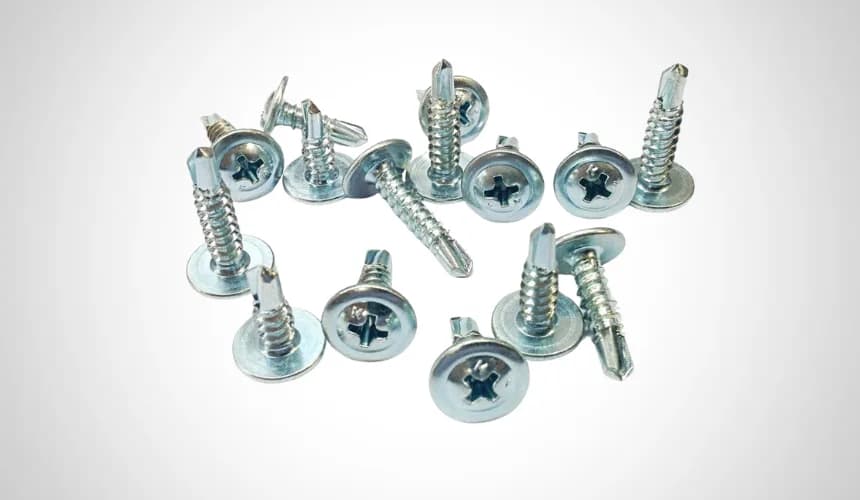
Self Drilling Screws
SDS Truss Head Screws
Wide flat head for thin sheet and framing
View specifications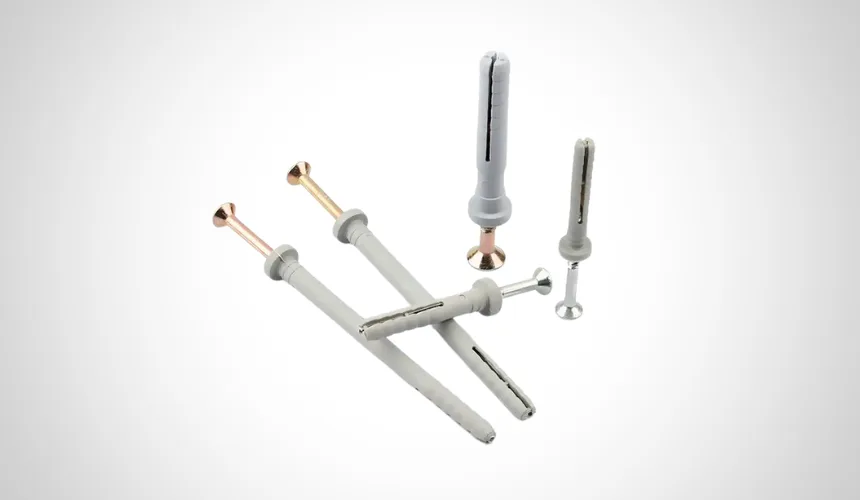
Anchors & Rivets
Nylon Frame Fixing
Long sleeve fixings for hollow, soft and mixed substrates
View specificationsTell us what you need
Send us the sizes and quantities, a photo, or just a description of the job. Most quotations go out the same working day.
Monday – Saturday, 9:30 AM – 7:00 PM · Delivery across Bengaluru, Karnataka and all India