
Corrosion & coatings
Zinc, Xylan or Bi-Metal? Choosing Fastener Corrosion Protection in India
Indian conditions punish fasteners: monsoon humidity, coastal salt, industrial pollution and thirty-degree temperature swings. Here is how the three main options actually perform.
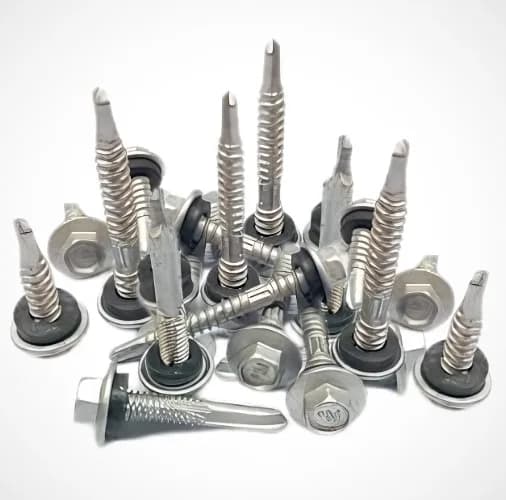
A fastener specification that works in Pune will fail in Mangalore. Fastener corrosion protection is the most location-dependent decision in the whole selection process, and it is the one most often made on unit price alone.
What fastener corrosion protection is actually protecting against
Four mechanisms account for nearly all fastener corrosion in India:
Atmospheric moisture. Monsoon humidity above 80 percent for months, with condensation cycling every night. Ordinary plating simply does not last through repeated wet-dry cycles.
Chloride attack. Salt aerosol travels inland further than most people expect — meaningful chloride loading is measurable 10 to 15 km from the coast. Chlorides break down the passive layer on zinc and attack the steel underneath.
Industrial pollution. Sulphur dioxide from power generation and industry forms acid on any wet surface. Fertiliser and chemical plants add ammonia and process vapours to that.
Galvanic coupling. Two dissimilar metals in electrical contact with an electrolyte between them — which in practice means a carbon steel screw in an aluminium panel with rainwater in the joint. The less noble metal corrodes preferentially and quickly.
Three levels of fastener corrosion protection, honestly compared
Zinc plating
5 to 12 microns of electroplated zinc, usually with a clear or yellow passivate. Zinc protects sacrificially — it corrodes in preference to the steel underneath, which is why a scratch does not immediately become a rust spot.
- Salt spray: 72–120 hours to white rust
- Realistic service life: 8–12 years on an inland, sheltered roof; 2–4 years within 10 km of the coast
- Cost index: 1.0×
- Right for: inland industrial sheds, internal partitions, general fabrication, anything sheltered from direct weather
The thing to understand about zinc is that its protection is a consumable layer. Once it has been used up, there is nothing left. That is a perfectly reasonable trade for a warehouse roof in Tumkur and a poor one for a coastal building.
Xylan fluoropolymer coating
A PTFE-loaded resin applied over a phosphated or zinc base and oven cured. It is a barrier coating rather than a sacrificial one, and it does two useful things at once: it multiplies corrosion life several times over plain zinc, and its lubricity cuts driving torque noticeably.
- Salt spray: 1,000+ hours to red rust
- Realistic service life: 15–20 years inland, 10–15 years semi-coastal
- Cost index: 1.8–2.5×
- Right for: colour-coated architectural roofing, humid and semi-coastal sites, food and pharma washdown areas, chemical vapour environments
- Bonus: can be pigmented to match coated roofing sheet, so the fixings disappear into the roof
Its weakness is that a barrier coating is only as good as its integrity. A worn nut setter that scars the head flange has created a corrosion site. Use clean, correctly sized sockets and replace them before they round. See our Xylan coated screws.
Bi-metal stainless
An austenitic stainless body friction-welded to a hardened carbon steel drill point. The exposed part of the fastener is stainless — not plated, not coated, but stainless as a material.
- Salt spray: effectively indefinite for the stainless body
- Realistic service life: 25 years and beyond
- Cost index: 3–4×
- Right for: direct coastal exposure, rooftop solar, chemical and fertiliser plants, cold storage, aluminium and composite cladding
Solid stainless self drilling screws do not work — austenitic stainless is too soft to drill and work-hardens as soon as it is worked. The bi-metal construction exists precisely to solve that. See bi-metal and epoxy coated screws.
SS 304 or SS 316? SS 304 (A2) for general corrosive and inland industrial work. SS 316 (A4) contains molybdenum and is markedly better against chlorides — specify it for direct coastal exposure, marine environments and chloride-rich chemical settings.
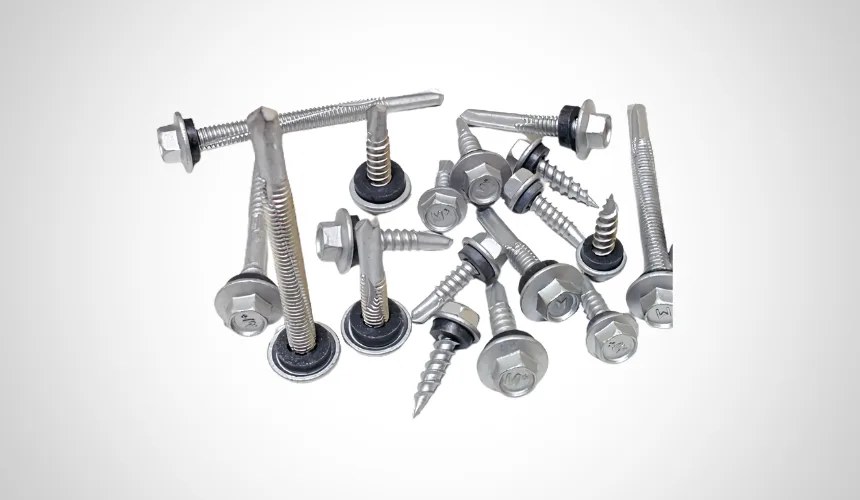
Choosing fastener corrosion protection by location
| Environment | Recommendation |
|---|---|
| Inland, sheltered (Bengaluru, Hyderabad, Pune) | Zinc plated |
| Inland, exposed / high rainfall | Xylan coated |
| 10–50 km from coast | Xylan coated, or bi-metal SS 304 |
| Within 10 km of coast | Bi-metal SS 316 |
| Industrial / chemical | Xylan coated or bi-metal, depending on the specific vapour |
| Rooftop solar (anywhere) | Bi-metal |
| Cold storage | Bi-metal or Xylan |
| Aluminium or composite panels | Bi-metal, or epoxy coated for galvanic isolation |
All salt spray figures quoted here are measured to ASTM B117, the neutral salt fog test. It is a comparative accelerated test, not a prediction of years in service — use it to rank options against each other, not to forecast a date.
The cost argument, done properly
Take a 2,000 m² warehouse roof needing roughly 12,000 fasteners.
The difference between zinc plated and bi-metal on that order is a few tens of thousands of rupees — a fraction of one percent of the roof package.
Re-fixing that roof at year eight because the fasteners have failed means access equipment, labour, disruption to whatever is operating underneath, and in many cases sheet replacement where the fixing holes have elongated. That is a six-figure number at minimum, and the sheet itself was fine.
The upgrade is almost always cheap insurance. The exception is a genuinely sheltered inland building with a short design life, where zinc plating is the honest and correct answer — and we will tell you so.
Three specification mistakes
Mixing grades on the same roof. The cheapest fasteners fail first, stain the sheet, and the whole installation gets blamed. If part of a roof needs bi-metal, specify bi-metal throughout.
Ignoring the washer. A stainless screw with a plain steel washer cap will still show a rust ring. The cap must match the fastener grade.
Assuming coastal means "on the beach". Salt aerosol carries. If the site is within about 15 km of the sea, treat it as coastal for fastener specification purposes.
Getting it right for your site
Fastener corrosion protection is one of the few specification decisions that cannot be corrected later without taking the building apart. Tell us the location, distance from the coast, the substrate and what is being fixed, and we will specify the grade rather than sell you the one in the box. Our self drilling screw range covers all three protection levels, and the applications guide works through the eight jobs we specify for most often.
Need this specified for a live job?
Send us the substrate, the load and the environment and we will confirm the right size and grade — usually the same working day.